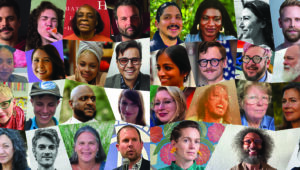
Community leaders across North Dakota and South Dakota have started work on six community-based projects. These leaders are alumni of the Change Network.
Change Network is a year-long experience where participants gain leadership techniques and explore collaborative opportunities. Now in an alumni-focused phase, the program’s network of trained leaders are working together across communities to put those skills into action.
Six Change Navigator Collaborator grants were awarded, each pairing two Change Network alumni, with up to $10,000 per project.
Each selected project brought together partners to tackle community challenges in new ways. Projects were chosen for their strong teamwork, thoughtful approach, and potential to scale and create change across more communities.
“These projects demonstrate the kind of leadership and systems-change work the Change Network was created to support. The selected alumni are applying the tools and frameworks they developed through the program to address complex community challenges through collaboration, relationship-building, and practical implementation,” said Megan Langley, Executive Director of Strengthen ND.
The six awarded projects are:
- Prism Healing Lab — Susan “Bill” Williams and Sarah Larson — Sioux Falls, SD
- New American Mental Health & Healing Circles — Nyamal Dei and Ann Fritz — Fargo, ND
- Inclusive Healthcare for Individuals with Disabilities — Tara Zettel, Janelle Stoneking, ABLE Inc., and Connect Medical Clinic
- From Conversation to Action: Tribal–Community Action Collective — Melinda Padilla Lynch and Erin Belgarde
- Belonging in North Dakota (B-ND) — Hamzat Koriko and Crista McCandles — ND
- Aligning Community and Clinical Support for Veteran Well-Being — Jill Baker (Community Action for Veterans) and Kyla Peterson (SunSpire Integrative Therapy and Consulting)
Each project requires at least two alumni working in collaboration and must be completed by December 1. Alumni can use funds for facilitation, materials, travel, convenings, and other direct project costs.
“What stood out throughout the review process was the depth of thought, care, and collaboration behind these proposals. The decisions were difficult because there were so many strong ideas and committed teams. I’m genuinely excited to see these projects move into action and to support work that reflects creativity, trust-building, and community-driven problem solving over the next six months,” said Cary A. Thrall, Change Network Alumni Council Chair.
Strengthen ND administers the Change Navigator Collaborator Program in partnership with the Change Network Alumni Council and National Arts Strategies.
The awarded projects description can be found below.
The Prism Healing Lab: An Intergenerational Expressive Arts & Systems Pilot
Led by Susan “Bill” Williams and Sarah Larson, this project transforms the Prism Community Center in Sioux Falls into a trauma-informed healing space for LGBTQIA2S+ individuals through expressive arts, environmental redesign, and intergenerational community connection. The project stood out for its strong alignment with Change Network principles by treating isolation and trauma as adaptive, systems-level challenges rather than individual problems. Through collaborative leadership, arts-based healing, and community-centered design, the project applies systems thinking, leverages community partnerships, and pilots a replicable model for inclusive healing spaces. The initiative demonstrates how small environmental and relational shifts can create broader ripple effects in community resilience, belonging, and long-term systems change.
New American Mental Health & Healing Circles
Nyamal Dei and Ann Fritz developed a culturally responsive mental health pilot designed to support New American families in Fargo through Healing Circles, workshops, and cross-sector collaboration. The project exemplified criteria alignment through deep community engagement, collaborative leadership, and practical systems change focused on reducing barriers to mental health access. Rather than viewing mental health challenges in isolation, the project examined how language access, trust, culture, and institutional systems shape well-being. The proposal demonstrated a clear implementation plan, strong feasibility, and meaningful application of Change Network frameworks such as equity-centered engagement and systems thinking. The pilot also emphasized learning and adaptation, with the goal of creating a scalable and culturally grounded model for future community health work across North Dakota.
Inclusive Healthcare: Advancing Dignified, Person-Centered Medical Care for Individuals with Disabilities
This collaboration between Tara Zettel, Janelle Stoneking, ABLE, Inc., and Connect Medical Clinic focused on redesigning healthcare experiences for individuals with intellectual and developmental disabilities. The project was selected because it combined systems mapping, co-design, and rapid-cycle learning to address longstanding gaps in healthcare access and dignity. Through adapted communication tools, longer appointment models, trauma-informed care practices, and accessibility supports, the team piloted practical strategies that can improve both patient outcomes and provider confidence. The project strongly reflected Change Network values through cross-sector collaboration, centering lived experience, and testing scalable systems-level improvements that could influence future healthcare practices statewide.
From Conversation to Action: Tribal–Community Action Collective
Melinda Padilla Lynch and Erin Belgarde designed a culturally grounded facilitation and implementation model to help Tribal and rural communities move from planning into sustained action. The project responded to a common challenge in community development: communities often spend years in assessment and planning without receiving the support needed for implementation and follow-through. The proposal aligned strongly with Collaborator Grant criteria through its emphasis on relationship-centered leadership, systems thinking, and community-led action planning. The project blends storytelling, listening sessions, facilitation training, and implementation support to strengthen Tribal-government collaboration and community ownership. The Alumni Council recognized the project’s strong potential for replication, long-term systems impact, and creation of practical tools that other communities can adapt.
Belonging in North Dakota (B-ND): Systems Mapping + Pilot
Hamzat Koriko and Crista McCandles developed a collaborative systems-change initiative focused on strengthening belonging and inclusion for immigrants and New Americans across North Dakota. The project combines systems mapping, community dialogue, storytelling, and pilot interventions to identify barriers and test new approaches to inclusion. The proposal reflected exceptional alignment with Change Network principles by centering collaborative leadership, adaptive learning, stakeholder engagement, and systems-level analysis. Rather than focusing only on individual experiences, the project explores how institutions, policies, and community relationships shape belonging. The initiative stood out for its thoughtful application of systems-thinking tools, strong cross-sector partnerships, and commitment to generating practical insights and replicable frameworks that can support more welcoming communities statewide.
Aligning Community and Clinical Support for Veteran Well-Being
This collaborative pilot between Jill Baker of Community Action for Veterans and Kyla Peterson of SunSpire Integrative Therapy and Consulting focuses on improving how veterans move between community-based support systems and clinical care settings. Rather than creating new programs, the project aims to strengthen coordination, trust, referral pathways, and continuity of care for veterans who often experience fragmented systems, stigma, and disengagement from services. Using a Plan-Do-Study-Act approach, the team will test and refine real-world coordination strategies across both community and clinical settings while gathering ongoing feedback from veterans and partners. The proposal demonstrated strong alignment with Change Network principles through systems thinking, cross-sector collaboration, adaptive learning, and human-centered design. The project stood out for its practical focus on improving existing systems, its strong collaborative leadership model, and its commitment to generating a tested framework that could inform broader approaches to veteran well-being and care coordination in the future.