A Big Announcement from NAS

By NAS | Announcement

We have big news to share.

There’s no easy way to say it, so here it is: 2026 will be NAS’s final year of operating in our current form.

For more than 40 years, NAS has existed to support the artists, cultural leaders, and changemakers shaping organizations and communities across the arts and culture sector. You, our community, are the reason NAS exists.

And to support you – to make meaningful opportunities available to those who would most benefit from them – we chose years ago to fund our programming almost entirely through philanthropic support rather than participant fees. We cultivated a small number of deeply aligned foundation partners willing to join us in this work, and with their longstanding and loyal support, we created financially accessible opportunities for thousands of leaders in incredibly challenging times in our sector and world. And yet, while this was the strategic and values-aligned choice for us and the field, unfortunately, it also created challenges for maintaining our status as a public charity.

All non-profit 501(c )(3) public charities under the U.S. Internal Revenue Code are subject to an annual public support test looking at the breadth of an organization’s funding sources. Ours are not broad. For a long time, we managed to pass the public support test by a small margin. Unfortunately, we learned recently that we no longer do.

This means that our federal tax status has shifted from a public charity to a private foundation. And while we’re still technically a nonprofit, we now have new operational restrictions and constraints that are incompatible with the nature of our operations and activities.

To be clear, this change is the result of a technical calculation required under the U.S. Internal Revenue Code, not a financial shortfall, a governance issue, or directly tied to the current U.S. administration. We’ve known this outcome was a possibility for years, and we did our best to prevent it for as long as we could. Even as we navigate this result, we know that our decision to prioritize access was the right one for us, and that supporting our people is far more important than maintaining any given organizational structure.

So…what does this all mean?

It means that while we can’t function long into the future as a private foundation, we CAN do a whole lot of good in 2026. We have the funds, the team, and the community to make this a deeply meaningful year, and we plan to make the most of it. This year, we will:

  1. Continue delivering on all current program commitments. We’re welcoming two new cohorts of Creative Community Fellows: New England as we speak, and will continue to show up for all the folks who’ve signed up for our programming this year.
  2. Invest $1 million back into our community, creating more meaningful opportunities for connection and support in these challenging times.
  3. Share what we’ve learned with the field so the lessons live on long after NAS in our current form. We want everyone to know what we’ve learned about the needs of arts and culture leaders, seeding systems change in our field, designing with instead of for the people we want to serve, the challenges of funding leadership development sustainably, and so much more.
  4. Explore what might be in store for 2027 and beyond. It’s not the structure of NAS that matters, it’s the work of supporting arts and culture leaders such that you all can continue driving inspiring change for the future. This is our priority: finding ways for the work to continue, even if NAS needs to change. We’ll be exploring possibilities, and will keep you posted as we’re able.

If reading this brings up big questions and feelings for you, know that you’re not alone. We have been so incredibly grateful to work together, and the knowledge that things are going to change – especially in such volatile times – is hard to hold. And yet, we’re feeling excited about the year ahead: about getting to run our current programming and invest more in our alumni community. We’re excited to share what we’ve learned and explore how the work might continue next year and into the future.

And more than anything else, we are grateful. Because if we’ve played even a small role in the incredible work you do and the way you show up for your community, then our mission has already been accomplished, and the legacy of the work we’ve done together will continue long into the future.

This is our first message about the transition ahead, but it won’t be the last. Stay tuned via our monthly newsletter for updates and opportunities. And for questions about this transition that aren’t addressed here, visit our FAQs below and know that there’s more to come.

Thank you for all you do, and for being with us on what has been and will continue to be an incredible journey.


In deep gratitude,
The NAS Team

A group photo of the NAS team

NAS team setting our 2026 intentions

We have big news to share.

There’s no easy way to say it, so here it is: 2026 will be NAS’s final year of operating in our current form.

For more than 40 years, NAS has existed to support the artists, cultural leaders, and changemakers shaping organizations and communities across the arts and culture sector. You, our community, are the reason NAS exists.

And to support you – to make meaningful opportunities available to those who would most benefit from them – we chose years ago to fund our programming almost entirely through philanthropic support rather than participant fees. We cultivated a small number of deeply aligned foundation partners willing to join us in this work, and with their longstanding and loyal support, we created financially accessible opportunities for thousands of leaders in incredibly challenging times in our sector and world. And yet, while this was the strategic and values-aligned choice for us and the field, unfortunately, it also created challenges for maintaining our status as a public charity.

All non-profit 501(c )(3) public charities under the U.S. Internal Revenue Code are subject to an annual public support test looking at the breadth of an organization’s funding sources. Ours are not broad. For a long time, we managed to pass the public support test by a small margin. Unfortunately, we learned recently that we no longer do.

This means that our federal tax status has shifted from a public charity to a private foundation. And while we’re still technically a nonprofit, we now have new operational restrictions and constraints that are incompatible with the nature of our operations and activities.

To be clear, this change is the result of a technical calculation required under the U.S. Internal Revenue Code, not a financial shortfall, a governance issue, or directly tied to the current U.S. administration. We’ve known this outcome was a possibility for years, and we did our best to prevent it for as long as we could. Even as we navigate this result, we know that our decision to prioritize access was the right one for us, and that supporting our people is far more important than maintaining any given organizational structure.

So…what does this all mean?

It means that while we can’t function long into the future as a private foundation, we CAN do a whole lot of good in 2026. We have the funds, the team, and the community to make this a deeply meaningful year, and we plan to make the most of it. This year, we will:

  1. Continue delivering on all current program commitments. We’re welcoming two new cohorts of Creative Community Fellows: New England as we speak, and will continue to show up for all the folks who’ve signed up for our programming this year.
  2. Invest $1 million back into our community, creating more meaningful opportunities for connection and support in these challenging times.
  3. Share what we’ve learned with the field so the lessons live on long after NAS in our current form. We want everyone to know what we’ve learned about the needs of arts and culture leaders, seeding systems change in our field, designing with instead of for the people we want to serve, the challenges of funding leadership development sustainably, and so much more.
  4. Explore what might be in store for 2027 and beyond. It’s not the structure of NAS that matters, it’s the work of supporting arts and culture leaders such that you all can continue driving inspiring change for the future. This is our priority: finding ways for the work to continue, even if NAS needs to change. We’ll be exploring possibilities, and will keep you posted as we’re able.

If reading this brings up big questions and feelings for you, know that you’re not alone. We have been so incredibly grateful to work together, and the knowledge that things are going to change – especially in such volatile times – is hard to hold. And yet, we’re feeling excited about the year ahead: about getting to run our current programming and invest more in our alumni community. We’re excited to share what we’ve learned and explore how the work might continue next year and into the future.

And more than anything else, we are grateful. Because if we’ve played even a small role in the incredible work you do and the way you show up for your community, then our mission has already been accomplished, and the legacy of the work we’ve done together will continue long into the future.

This is our first message about the transition ahead, but it won’t be the last. Stay tuned via our monthly newsletter for updates and opportunities. And for questions about this transition that aren’t addressed here, visit our FAQs below and know that there’s more to come.

Thank you for all you do, and for being with us on what has been and will continue to be an incredible journey.


In deep gratitude,
The NAS Team
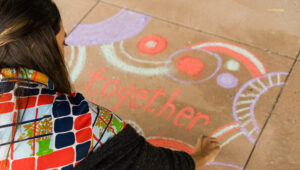
A group photo of the NAS team

Frequently Asked Questions

What is happening at NAS?
NAS’s tax status has shifted from a non-profit 501(c )(3) public charity to a non-profit 501(c )(3) private foundation. For most of our existence, NAS has been classified as a non-profit 501(c )(3) public charity under the U.S. Internal Revenue Code. Public charities must meet an annual public support test, which measures the breadth funding a charity receives from the general public to ensure it is responsive to the needs of a broad segment of the population. After many years of passing this test by a narrow margin, we recently learned that we no longer do. As a result, our federal tax status has shifted from a public charity to a private foundation.

This shift is the result of complex, technical calculations required under the Internal Revenue Code, not a financial shortfall or governance issue. NAS remains financially stable and fully resourced to meet all commitments in 2026.

Why is NAS’s tax status changing?

From the beginning, NAS made a deliberate choice about how our work would be funded. Rather than charging participants the full cost of a program, we built our programming primarily through philanthropic support so that arts and culture leaders, especially those working in under-resourced environments, could participate free of charge or at highly subsidized rates.

We cultivated a small number of deeply aligned foundation partners willing to invest in long-term leadership development in a field that has historically received limited sustained support.

While this was the values-aligned choice for us and the field, it meant operating very close to the IRS threshold that determines whether an organization qualifies as a public charity. Over time, relying on a small number of funders made meeting that threshold increasingly difficult. Ultimately, we no longer passed the public support test, which required a shift in classification to private foundation status. However, being classified as a private foundation doesn’t change our non-profit status or our fundamental mission.

What does this new tax status mean for how NAS operates?

Private foundations are still nonprofit organizations, but they operate differently from public charities, and are governed by different norms and restrictions. NAS was designed to operate as a public charity. After consulting extensively with our legal team and board, it’s clear that the design that worked in our old tax status won’t work in our new one. It impacts our ability to fundraise from foundations, and in turn, run programs as we have and many other aspects of our work.

Given that, we can’t sustain our current model for long with our new tax classification. But we have worked closely with our lawyers, board, staff, and funders to ensure we can continue our operations this year while fully complying with our new private foundation status.

To sum it up: we can do a whole lot of good in 2026, but our current approach isn’t sustainable, meaning fundamental changes to the nature of our organization are in store in 2027 and beyond.

Is NAS currently operating?

Yes. NAS is fully operational throughout 2026.

We are delivering on all current program commitments, welcoming new cohorts, honoring grant agreements, and investing an additional $1 million directly into our community of arts and culture leaders this year.

Thanks to our legal team, board, staff, and funders, we are able to do all this in full compliance with our new tax status as a private foundation. While doing so for the long-term isn’t sustainable, we currently have the funds, the team, and the community to make 2026 a deeply meaningful year.

What does “final year in its current form” mean and what happens next?

It means that NAS as we know it – the team, the programs – cannot continue as we have been beyond 2026. That doesn’t mean the work can’t continue. It’s just that our new organizational structure (private foundation) can’t hold that work in the way it has been.

We are actively exploring what options might be on the table, including transitioning programs into their own entities, mergers, sunsetting – there are many possibilities.

Is this change the result of the current U.S. administration?

Not directly, but there is a connection.

We’ve known for a long time that we were operating on the margins of public charity status, and that at some point this change might come. We’ve been paying close attention and trying to keep our funding base broad enough to pass the public support test each year.

In 2025, funding priorities for many foundations in the U.S. rightly changed. As a field, we experienced collectively the devastating budget cuts, the fear of political targeting, and more. While we at NAS risked tipping into private foundation status, others risked losing funding entirely or worse.

Given that, as we became aware that we likely wouldn’t pass the public support test late last year, it didn’t feel right nor was there a clear enough path to raise the funds needed to prevent this outcome. We already had all the money we needed to support our team and run our programs throughout 2026. We would never run an emergency fundraising campaign to prevent a change in tax status when so many others faced true emergencies. Especially when doing so might have only pushed off this outcome for a few years.

So we hold two truths at once: our change in tax status is not a direct result of the U.S. administration, and was always a possibility. At the same time, the current political landscape and resulting shift in field funding priorities did influence the timing and how we chose to show up to this change.

Why didn’t we charge higher fees or fundraise from our community?

Charging higher participant fees or shifting to a fee-for-service only structure would fundamentally change who NAS is and serves.

Our model was built on the belief that leadership development in the arts should be accessible, especially to those working in under-resourced environments. Charging full-cost (or even reduced-cost) fees would narrow access and undermine the values that have guided our work for four decades.

We explored alternatives over the years, including individual fundraising. In the end, our choices were guided by values, making sure NAS’s structure, effort, and resources matched the impact we wanted to have.

What are our plans for 2026 and why?

We shared our plans in brief above, but here’s a bit more about them and why:


  1. We’re going to deliver on all existing programmatic commitments. This one is self explanatory: everything we said we’d do and have been funded for will still proceed as planned.
  2. We’re investing more into our community. You don’t need us to tell you that these are challenging times. As we face the uncertainty of 2027 and beyond, we recognize that we have a unique opportunity now. We have an incredible team, a wonderful community, and access to substantial financial resources we’ve raised over the years. After extensive conversations with our staff and board, we decided this is the moment to do more, not less. To lead with abundance, to leverage our resources generously, to honor our deep commitment of caring for our community. That’s why we decided to invest an additional $1M back into arts and culture leaders.

    With our new private foundation status, there are constraints on how this money can be spent, but many ways to put it to good use. Our intention is to re-invest in our community, to offer the alumni of our many programs over the years the opportunity to reconnect and continue learning with and from one another. Because that’s what we do, and that’s so much of what the world needs right now: good people coming together to care for themselves and one another as we work collectively towards change.

    We’re finalizing our plans for these funds now, and will share updates in our monthly newsletter (if you’re not signed up, you can do so here)

  3. There’s so much that we’ve learned over the years and we want to share as much of it as we can. We’ve always tried to live our learnings out loud, but we’re a small team, and we often prioritize doing the work over talking about it publicly. We don’t often publish or speak at conferences, we’re not active on social media.

    As we sit with the uncertainty of what’s ahead, it feels important to share what we’ve learned to the benefit of the field. We’ve been supporting arts and culture leaders for decades – we’ve learned so much about what’s needed, what works, and what doesn’t. We have meaningful data, powerful stories, and much to say that we don’t want to get lost in the transitions ahead. So once again, stay tuned to our newsletter. It’s the best place to follow along on this journey.

  4. And of course, we’re going to explore how the work will continue in 2027 and beyond. We know that our new private foundation structure can’t sustain our current programming, but that doesn’t mean the work isn’t sustainable. As mentioned above, there are so many possibilities, and we’re excited to explore them.
What impact has NAS had on the field?

Over the past 43 years, NAS has supported more than 5,000 arts and culture leaders internationally, supporting these individuals and their organizations through growth, transition, and uncertainty.

Through fellowships, coaching, cohort-based programs, and alumni networks, NAS has helped leaders build trusted peer relationships that extend well beyond formal program timelines. Ideas seeded in one place have circulated across regions, disciplines, and communities through these networks.

Because our work has been an investment in leaders, the true impact of NAS’s work is felt through them: the way they lead, the work they do in their communities, the ripple effects of their choices and contributions to the field. We are confident that our community of leaders will go on to do incredible things for decades to come, and we know their work will inspire others as well, such that the resonance will continue long after this chapter of NAS ends.

Where do we go from here?

We reflect on what so many organizations are facing right now: big, existential questions, uncertain futures, and the reality that not all work can or should continue indefinitely. These are difficult moments for any mission-driven organization, and thinking carefully about how we show up for our communities is critical.

We are actively exploring what options might be on the table, including transitioning programs into their own entities, mergers, sunsetting – there are many possibilities.

This is just the start of the conversation. Throughout the year, we’ll continue sharing updates, insights, and reflections to support leaders and the field as this work evolves.

Frequently Asked Questions

What is happening at NAS?
NAS’s tax status has shifted from a non-profit 501(c )(3) public charity to a non-profit 501(c )(3) private foundation. For most of our existence, NAS has been classified as a non-profit 501(c )(3) public charity under the U.S. Internal Revenue Code. Public charities must meet an annual public support test, which measures the breadth funding a charity receives from the general public to ensure it is responsive to the needs of a broad segment of the population. After many years of passing this test by a narrow margin, we recently learned that we no longer do. As a result, our federal tax status has shifted from a public charity to a private foundation.

This shift is the result of complex, technical calculations required under the Internal Revenue Code, not a financial shortfall or governance issue. NAS remains financially stable and fully resourced to meet all commitments in 2026.

Why is NAS’s tax status changing?

From the beginning, NAS made a deliberate choice about how our work would be funded. Rather than charging participants the full cost of a program, we built our programming primarily through philanthropic support so that arts and culture leaders, especially those working in under-resourced environments, could participate free of charge or at highly subsidized rates.

We cultivated a small number of deeply aligned foundation partners willing to invest in long-term leadership development in a field that has historically received limited sustained support.

While this was the values-aligned choice for us and the field, it meant operating very close to the IRS threshold that determines whether an organization qualifies as a public charity. Over time, relying on a small number of funders made meeting that threshold increasingly difficult. Ultimately, we no longer passed the public support test, which required a shift in classification to private foundation status. However, being classified as a private foundation doesn’t change our non-profit status or our fundamental mission.

What does this new tax status mean for how NAS operates?

Private foundations are still nonprofit organizations, but they operate differently from public charities, and are governed by different norms and restrictions. NAS was designed to operate as a public charity. After consulting extensively with our legal team and board, it’s clear that the design that worked in our old tax status won’t work in our new one. It impacts our ability to fundraise from foundations, and in turn, run programs as we have and many other aspects of our work.

Given that, we can’t sustain our current model for long with our new tax classification. But we have worked closely with our lawyers, board, staff, and funders to ensure we can continue our operations this year while fully complying with our new private foundation status.

To sum it up: we can do a whole lot of good in 2026, but our current approach isn’t sustainable, meaning fundamental changes to the nature of our organization are in store in 2027 and beyond.

Is NAS currently operating?

Yes. NAS is fully operational throughout 2026.

We are delivering on all current program commitments, welcoming new cohorts, honoring grant agreements, and investing an additional $1 million directly into our community of arts and culture leaders this year.

Thanks to our legal team, board, staff, and funders, we are able to do all this in full compliance with our new tax status as a private foundation. While doing so for the long-term isn’t sustainable, we currently have the funds, the team, and the community to make 2026 a deeply meaningful year.

What does “final year in its current form” mean and what happens next?

It means that NAS as we know it – the team, the programs – cannot continue as we have been beyond 2026. That doesn’t mean the work can’t continue. It’s just that our new organizational structure (private foundation) can’t hold that work in the way it has been.

We are actively exploring what options might be on the table, including transitioning programs into their own entities, mergers, sunsetting – there are many possibilities.

Is this change the result of the current U.S. administration?

Not directly, but there is a connection.

We’ve known for a long time that we were operating on the margins of public charity status, and that at some point this change might come. We’ve been paying close attention and trying to keep our funding base broad enough to pass the public support test each year.

In 2025, funding priorities for many foundations in the U.S. rightly changed. As a field, we experienced collectively the devastating budget cuts, the fear of political targeting, and more. While we at NAS risked tipping into private foundation status, others risked losing funding entirely or worse.

Given that, as we became aware that we likely wouldn’t pass the public support test late last year, it didn’t feel right nor was there a clear enough path to raise the funds needed to prevent this outcome. We already had all the money we needed to support our team and run our programs throughout 2026. We would never run an emergency fundraising campaign to prevent a change in tax status when so many others faced true emergencies. Especially when doing so might have only pushed off this outcome for a few years.

So we hold two truths at once: our change in tax status is not a direct result of the U.S. administration, and was always a possibility. At the same time, the current political landscape and resulting shift in field funding priorities did influence the timing and how we chose to show up to this change.

Why didn’t we charge higher fees or fundraise from our community?

Charging higher participant fees or shifting to a fee-for-service only structure would fundamentally change who NAS is and serves.

Our model was built on the belief that leadership development in the arts should be accessible, especially to those working in under-resourced environments. Charging full-cost (or even reduced-cost) fees would narrow access and undermine the values that have guided our work for four decades.

We explored alternatives over the years, including individual fundraising. In the end, our choices were guided by values, making sure NAS’s structure, effort, and resources matched the impact we wanted to have.

What are our plans for 2026 and why?

We shared our plans in brief above, but here’s a bit more about them and why:


  1. We’re going to deliver on all existing programmatic commitments. This one is self explanatory: everything we said we’d do and have been funded for will still proceed as planned.
  2. We’re investing more into our community. You don’t need us to tell you that these are challenging times. As we face the uncertainty of 2027 and beyond, we recognize that we have a unique opportunity now. We have an incredible team, a wonderful community, and access to substantial financial resources we’ve raised over the years. After extensive conversations with our staff and board, we decided this is the moment to do more, not less. To lead with abundance, to leverage our resources generously, to honor our deep commitment of caring for our community. That’s why we decided to invest an additional $1M back into arts and culture leaders.

    With our new private foundation status, there are constraints on how this money can be spent, but many ways to put it to good use. Our intention is to re-invest in our community, to offer the alumni of our many programs over the years the opportunity to reconnect and continue learning with and from one another. Because that’s what we do, and that’s so much of what the world needs right now: good people coming together to care for themselves and one another as we work collectively towards change.

    We’re finalizing our plans for these funds now, and will share updates in our monthly newsletter (if you’re not signed up, you can do so here)

  3. There’s so much that we’ve learned over the years and we want to share as much of it as we can. We’ve always tried to live our learnings out loud, but we’re a small team, and we often prioritize doing the work over talking about it publicly. We don’t often publish or speak at conferences, we’re not active on social media.

    As we sit with the uncertainty of what’s ahead, it feels important to share what we’ve learned to the benefit of the field. We’ve been supporting arts and culture leaders for decades – we’ve learned so much about what’s needed, what works, and what doesn’t. We have meaningful data, powerful stories, and much to say that we don’t want to get lost in the transitions ahead. So once again, stay tuned to our newsletter. It’s the best place to follow along on this journey.

  4. And of course, we’re going to explore how the work will continue in 2027 and beyond. We know that our new private foundation structure can’t sustain our current programming, but that doesn’t mean the work isn’t sustainable. As mentioned above, there are so many possibilities, and we’re excited to explore them.
What impact has NAS had on the field?

Over the past 43 years, NAS has supported more than 5,000 arts and culture leaders internationally, supporting these individuals and their organizations through growth, transition, and uncertainty.

Through fellowships, coaching, cohort-based programs, and alumni networks, NAS has helped leaders build trusted peer relationships that extend well beyond formal program timelines. Ideas seeded in one place have circulated across regions, disciplines, and communities through these networks.

Because our work has been an investment in leaders, the true impact of NAS’s work is felt through them: the way they lead, the work they do in their communities, the ripple effects of their choices and contributions to the field. We are confident that our community of leaders will go on to do incredible things for decades to come, and we know their work will inspire others as well, such that the resonance will continue long after this chapter of NAS ends.

Where do we go from here?

We reflect on what so many organizations are facing right now: big, existential questions, uncertain futures, and the reality that not all work can or should continue indefinitely. These are difficult moments for any mission-driven organization, and thinking carefully about how we show up for our communities is critical.

We are actively exploring what options might be on the table, including transitioning programs into their own entities, mergers, sunsetting – there are many possibilities.

This is just the start of the conversation. Throughout the year, we’ll continue sharing updates, insights, and reflections to support leaders and the field as this work evolves.


Related

You may also like: